The Problem
When Leah Milner-Campbell reached out to me to design management materials for the John Innes Centre, she needed clear, practical resources to help managers better support neurodivergent employees. The resources had to be simple and accessible, since existing information was either too academic or too vague, meaning it was difficult for managers to translate guidance into day-to-day actions.
Pain points for managers were:
- They lacked clear, actionable guidance on how to support neurodiverse team members
- They lacked confidence when applying inclusive practices
- They didn't have access to materials that could be quickly understood and referenced
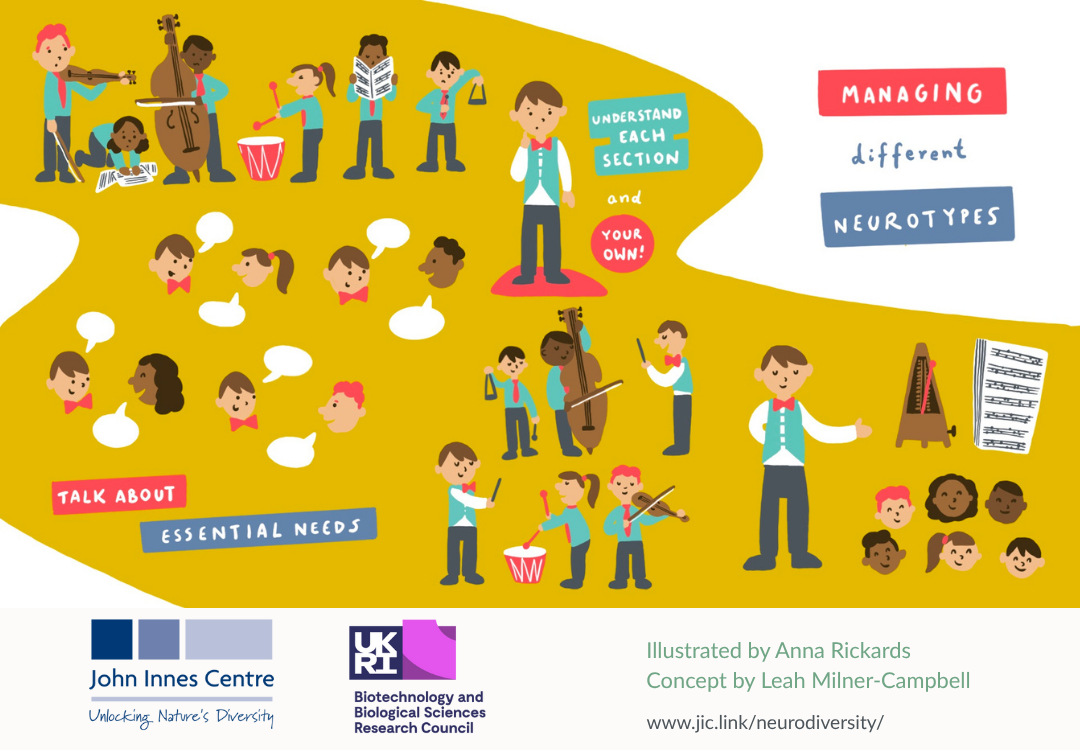
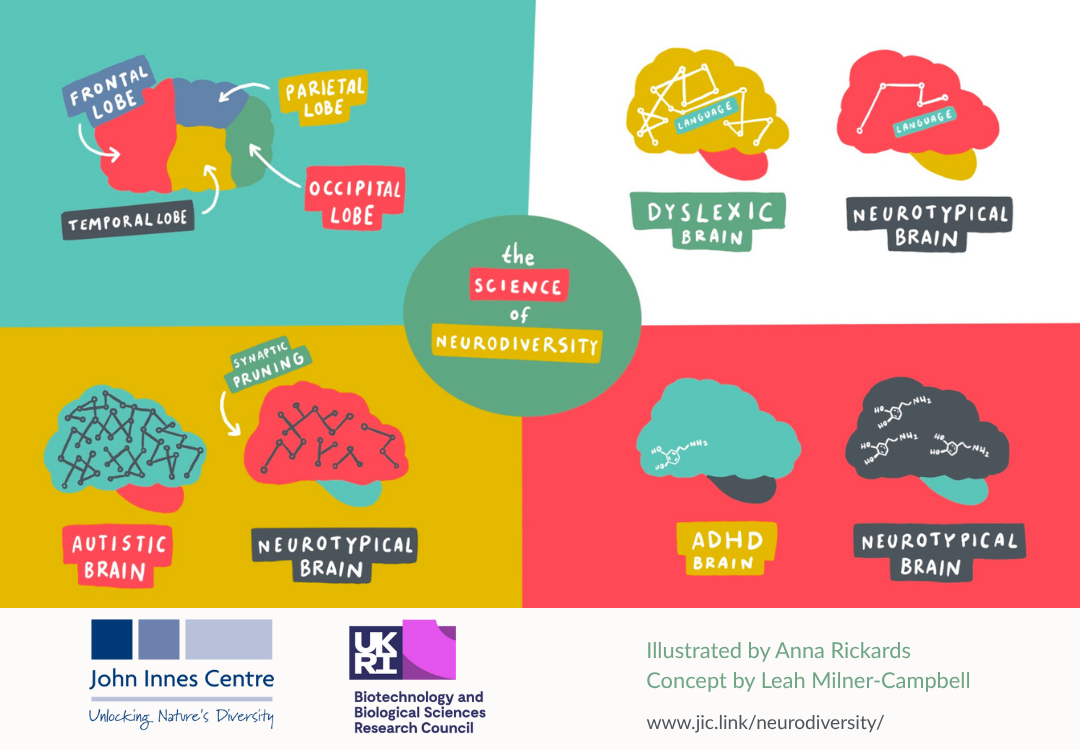
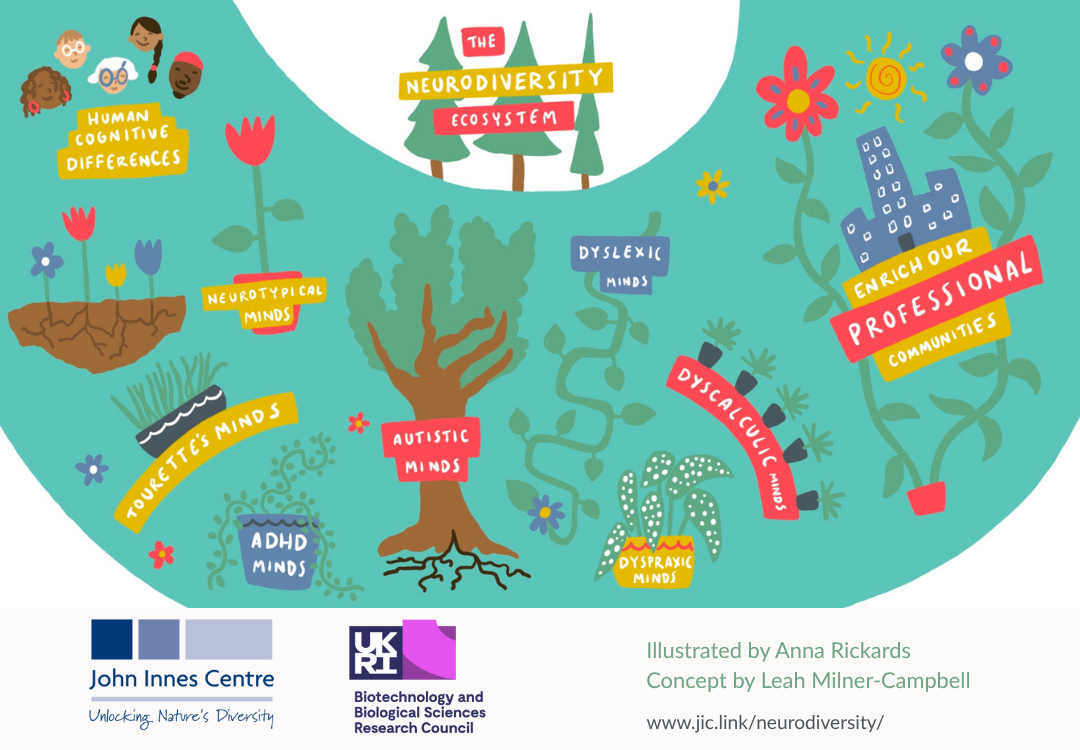
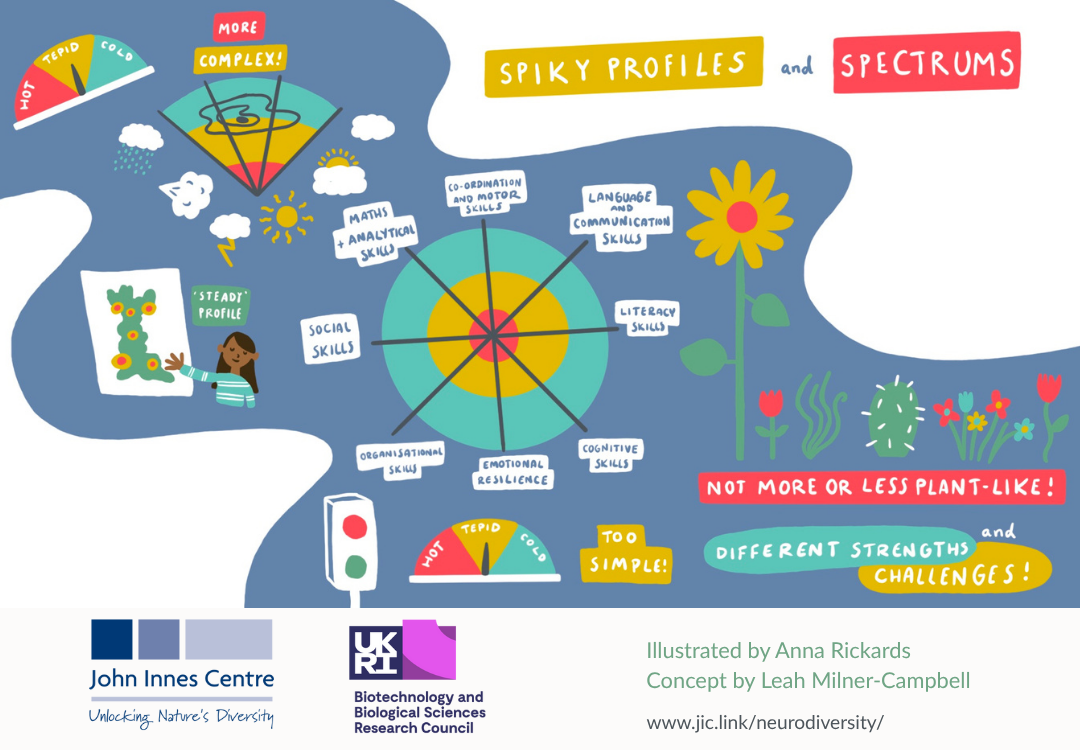
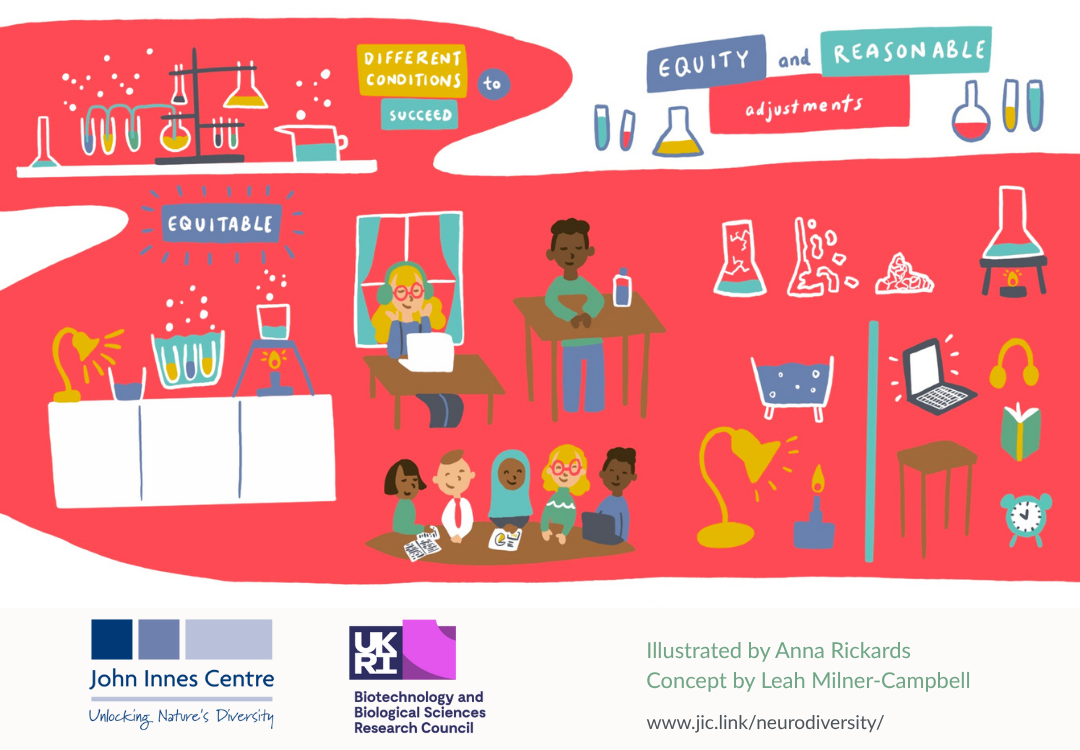
Enter Anna! I took Leah's scripts and visualised them, using imagery such as an orchestra, plants in nature, types of weather and lab work to illustrate Leah's key points about neurodiversity. Her objective with these resources was to showcase how including different neurotypes brings value to an organisation, and brings it strength.
My Design Process - What Worked? What Didn't?
For this project, clarity and accessibility were key factors in my design. I had to make sure the images were clear and easy to understand, whilst using JIC branding colours to do so. I was responsible for structuring, designing and refining the materials, submitting them to key stakeholders for feedback at each iteration.
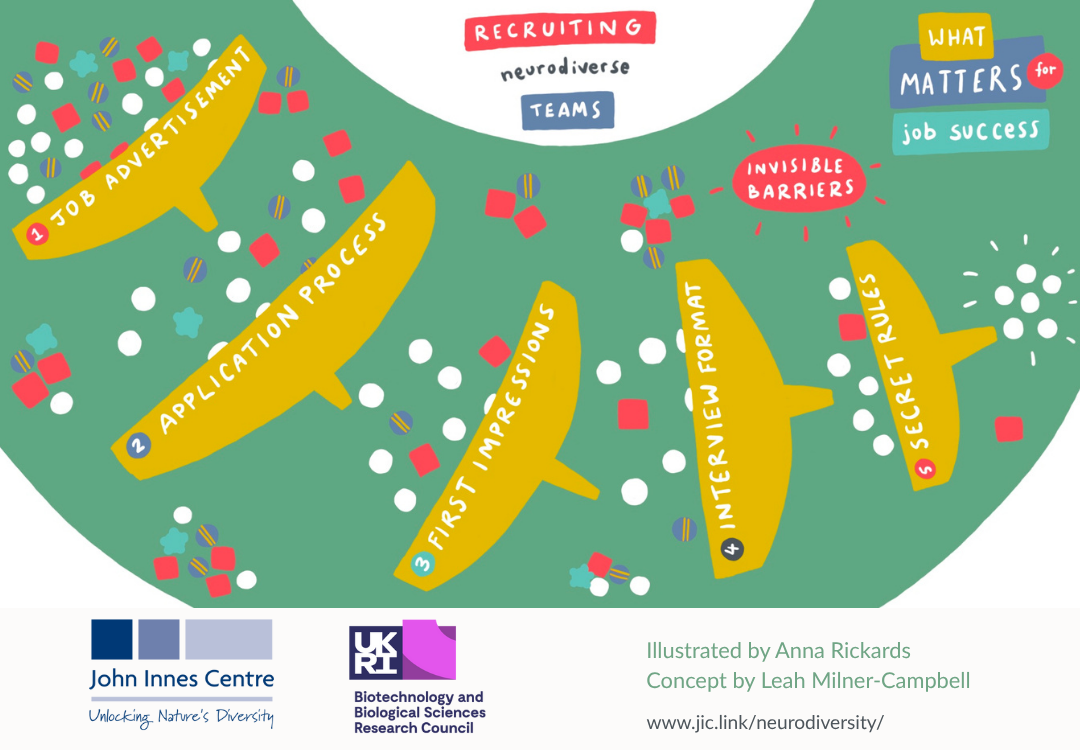
I made certain to prioritise readability and clarity in my designs, organising my content around real scenarios rather than abstract theory. When designing my funnels for the funnel comparison below, I had to change their shape, as they initially came out looking like pairs of underpants! Check out the final version of the design below:
Results and Feedback
Feedback on this project was overwhelmingly positive - users really responded well to the bright colours and simple imagery, and the project resulted in increased manager confidence in supporting neurodiverse team members, as well as a reduction in friction understanding and implementing inclusive practices in the workplace.
This project taught me a lot about information architecture, creating accessible and inclusive design and creating work that can help with cognitive load reduction. I also received the fantastic news that my work, alongside JIC's other neurodiversity projects, has been nominated for an award by the Royal Society of Chemistry!
Upon reflection, if I had had more time with the project, I would have loved to conduct more research with neurodiverse people themselves about their depiction in these materials, rather than just getting feedback from managers.